
Winter in the high country can feel like gardening purgatory: the beds are frozen, the hoses are buried somewhere under last fall’s good intentions, and even the pine trees look judgmental.
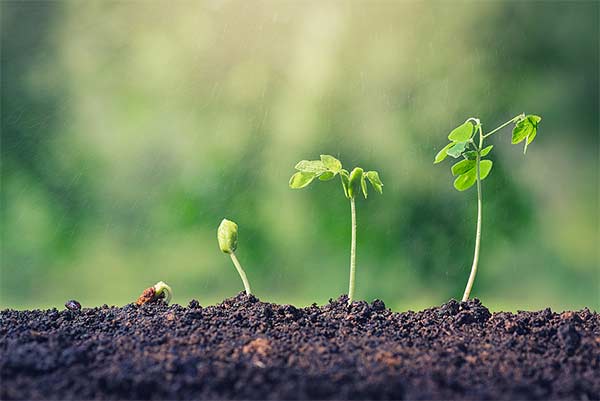
But guess what? Your gardening season starts NOW — indoors!
Starting seeds inside is like having a secret garden laboratory where you get to play mad scientist, produce your own plant army, and smugly say things like:
“Oh, these? I started them from seed.”
Here’s everything you need to start seeds like an absolute pro… even if you’ve never lifted a trowel indoors before.
1. Grow Lights vs. Sunny Windows: The Great Debate
Let’s settle this right now:
Sunny windows are the amateurs’ dream. Grow lights are the pros’ secret weapon.
A south-facing window can grow seedlings, sure. But your seedlings will often become:
- Leggy
- Floppy
- Pale
- Stretching for the sun like Victorian children kept indoors too long
Grow lights, on the other hand?
They keep your seedlings:
- Strong
- Stocky
- Dark green
- Too busy thriving to faint dramatically toward the sun
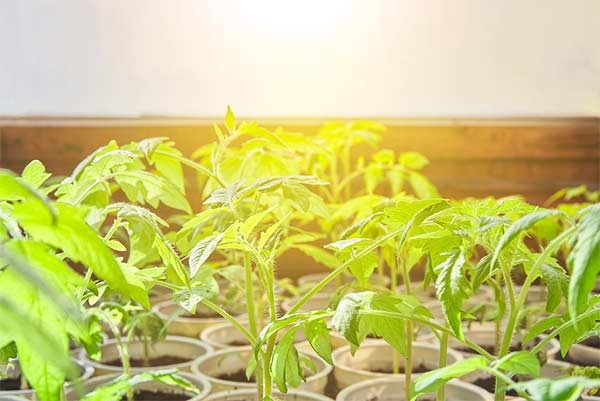
If you use a sunny window:
- Rotate plants daily
- Keep them as close to the glass as possible
- Expect some stretching
But hey — they’ll still grow.
You’re gardening, not performing surgery.
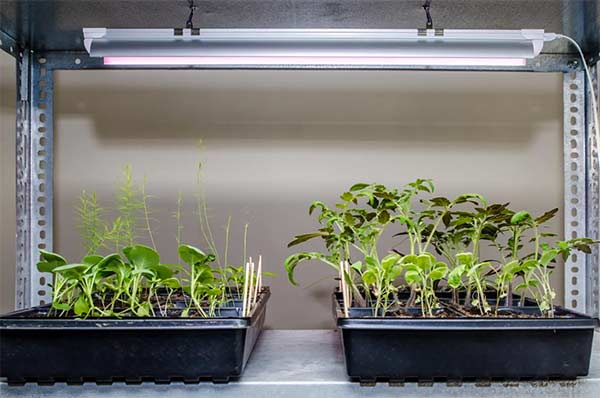
If you use grow lights:
- Keep lights 2–3 inches above seedlings
- Use a timer (14–16 hours/day)
- Adjust height frequently
- Your seedlings will look like they’ve been doing Pilates
2. Seed Viability Tests: Are Your Seeds Still Alive?
Before you plant anything, let’s make sure your seeds didn’t expire sometime during the Great Garden Tool Chaos of your garage.
Here’s how to test viability — fast, easy, no PhD required:
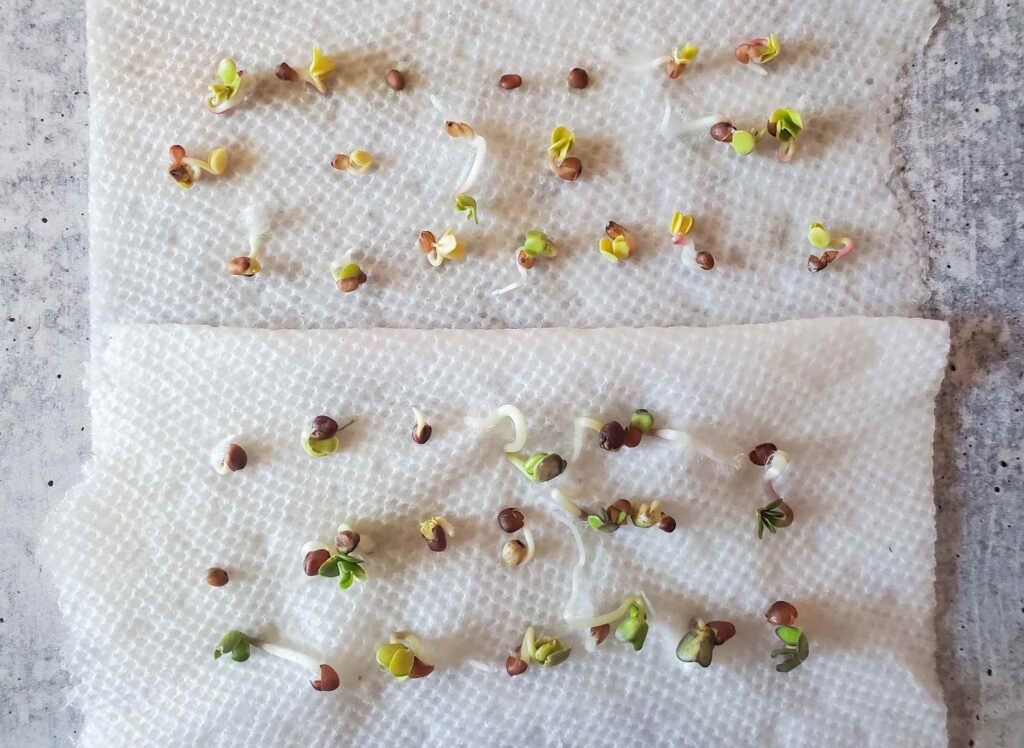
The Paper Towel Test
- Wet a paper towel until damp (not soggy).
- Sprinkle 10 seeds on it.
- Fold, slide into a plastic bag, and label it.
- Keep somewhere warm.
- Check in a few days (depends on crop).
If 7 out of 10 germinate, congrats!
Your seeds are still viable.
If 2 out of 10 germinate, they’re basically retired. Use double or triple sowing.
If none germinate, hold a brief ceremony and move on.
General Seed Longevity
- Onions: 1 year (not negotiable)
- Peppers: 2–3 years
- Tomatoes: 4–6 years
- Brassicas: 3–5 years
- Lettuce: 5+ years
The better you store them (cool, dry, dark), the longer they last.
3. Soil Blocks vs. Tray Starting: The Battle of the Seed-Starting Titans
Both methods work beautifully, and both have hardcore fans. Let’s look at the pros and cons:
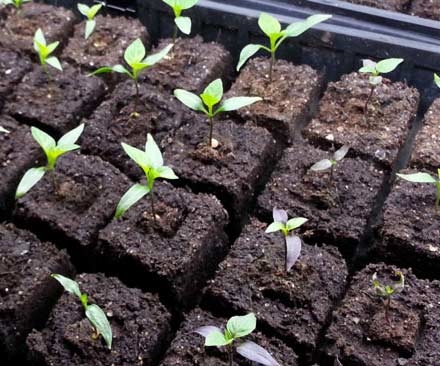
Soil Blocks (For the “I make everything artisanal” gardener)
Pros:
- Zero plastic
- Amazing root structure (air pruning = no circling roots)
- Easy transplanting
- Trendy enough to impress your gardening friends
Cons:
- Messy (expect soil on the counter, the floor, the dog…)
- Requires a blocker tool
- Blocks can dry out quickly
Best for:
Onions, leeks, cabbage, broccoli, herbs — anything that likes room to stretch.
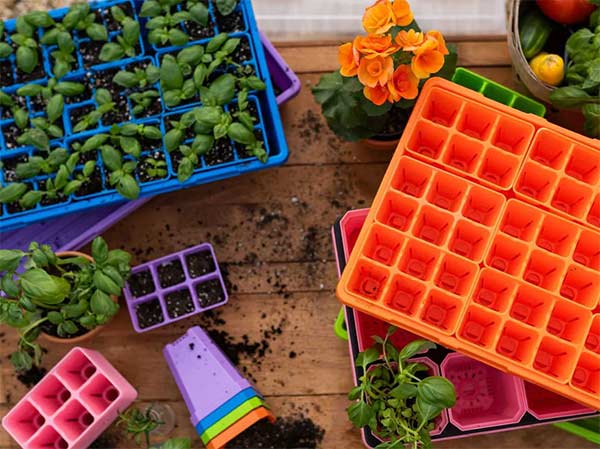
Seed Trays (For the “I like tidy little squares” gardener)
Pros:
- Neat, organized, stackable
- Retain moisture well
- Easy to bottom-water
- Available everywhere
Cons:
- Need replacing eventually
- Roots can circle if left too long
Best for:
Tomatoes, peppers, flowers, lettuce, and anything you’d like to keep evenly spaced.
4. Timing for Early Crops (Zone 6b Edition)
This is where beginners often trip up — but not you, because you’re about to be brilliant.
Here’s your “Start These Seeds Early or Else” list:
🧅 Onions
Start: Late November–January
Reason: They need a LONG runway before bulbing begins in late spring.
Tip: Give them a weekly “haircut” to keep stems 3–4 inches tall.
🥬 Cabbage
Start: February
Reason: Loves cool weather and transplants early.
Tip: Strong light = tight, sturdy seedlings that won’t flop over.
🥦 Broccoli
Start: February
Reason: Wants to mature before the summer heat hits.
Tip: Keep soil evenly moist — dryness + heat = bolting (and sadness).
⭐ Other Cool-Season Crops to Start Early
- Cauliflower
- Kale
- Brussels sprouts
- Lettuce (optional indoors, very easy to direct-sow)
- Swiss chard
5. Heat Mats, Airflow & Other Secret Weapons
Heat mats
Use ONLY for germination.
Once seeds sprout, remove them — otherwise seedlings stretch faster than kids outgrowing shoes.
Airflow
A tiny fan (on low!) builds sturdy stems and prevents fungus.
Bottom watering
Prevents damping off and avoids gnats moving in like tiny freeloaders.
Label everything
All brassica seedlings look identical.
Unless you want “Mystery Cabbroccoli,” use labels.
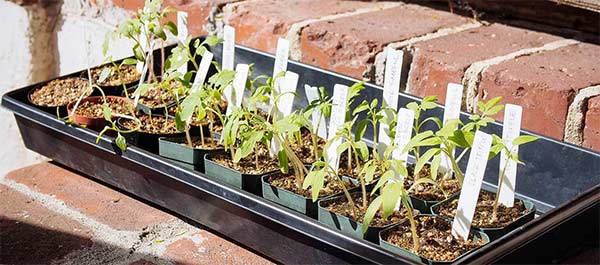
6. Potting Up, Hardening Off & Avoiding Tragedies
Potting up
When roots reach the edge of the block/tray, move them into bigger containers.
Your seedlings will sigh in relief.
Hardening off
A 7–10 day process of introducing your seedlings to the harsh realities of outdoor life:
- Day 1: 1 hour shade
- Day 2: 2 hours shade
- Day 3: light sun
- Day 7: full sun
- You: helicopter-parenting nervously the whole time
Common rookie mistakes to avoid
- Leaving seedlings under grow lights too far away
- Watering “a little” every day (leads to rot)
- Using regular garden soil indoors (gnats love you now)
- Not labeling plants
- Transplanting too early (“But it’s March and I’m bored!”)
7. Warm-Season Crops You Should Start Indoors (Because Zone 6b Isn’t the Tropics)
Ah, warm-season vegetables — the divas of the garden.
They love heat, they demand attention, and they absolutely will not perform without proper pampering in colder climates like ours.
Lucky for you, starting them indoors makes you their fabulous backstage manager.
Here’s what to start, when to start it, and how to keep it all fun and manageable.
🍅 Tomatoes — Absolutely Start Indoors
Start: Late March – early April
Why:
They need time. They need warmth. They need to be coddled.
Planting tomatoes outdoors from seed in Zone 6b is like sending toddlers on a marathon.
Indoors, they thrive; outdoors, they cry.
Pro tip:
Cherry tomatoes mature fastest. Beefsteaks take longer and require the patience of a saint.
🌶️ Peppers — Start Indoors or Surrender
Start: Early March (or even late February for slow varieties)
Why:
Peppers take FOREVER to germinate.
They sit there.
They stare at you.
They do nothing… and then one day, POP!
A seedling appears like it’s been dramatically planning an entrance for two weeks.
Pro tip:
They need warmth to sprout — heat mats help peppers more than almost any other crop.
🍆 Eggplant — Start Indoors
Start: Early to mid-March
Why:
They mature slowly, and they love heat even more than peppers.
Treat them like the Mediterranean royalty they are.
Pro tip:
Give them strong light early. Lazy seedlings = lazy eggplants = small harvests.
💚 Celery — Start Indoors (WAY Early)
Start: January – February
Why:
Celery takes longer to mature than a college philosophy major.
If you don’t start early, you’ll harvest sometime in November… just in time for snowstorms.
Pro tip:
Keep soil moist. Dry celery is angry celery.
🍉 Melons — Start Indoors (Lightly!)
Start: Late April
Why:
They can be started indoors, but they hate having their roots disturbed.
Think of melons like introverts—they need space.
Pro tip:
Use larger cells or soil blocks so you don’t have to repot.
🍈 Cucumbers — Yes, But Only a Little
Start: Late April – Early May
Why:
Give them a 2-week head start at most.
Any longer and they get dramatic during transplanting.
Pro tip:
If they get root-bound, they will hold grudges and refuse to thrive.
🎃 Squash (Zucchini, Winter Squash, Pumpkins) — You May Start Indoors, BUT…
Start: Late April (2–3 weeks before transplanting)
Why:
Squash grows fast. FAST. You give them an inch, and they take the whole grow room.
Start too early, and your seedlings will be monstrous, vining around your lamp like it’s auditioning for a Broadway musical.
Pro tip:
- Give them a small head start — just a couple of weeks.
- Transplant gently. Squash hates root disturbance even more than melons do.
🌽 Corn — Do NOT Start Indoors
Why:
Corn wants to grow where it lands.
Start indoors and it sulks.
Start outdoors and it thrives.
Corn is a diva… but a very specific kind of diva who refuses to leave their dressing room.
🫘 Beans — Hard Pass on Starting Indoors
They sprout in warm soil like they’re racing someone.
Starting beans indoors is like pre-soaking fireworks. Just… why?
Plant them outdoors in early June.
Warm-Season Summary: Your Zone 6b Head-Start Cheat Sheet
| Crop | Start Indoors? | When to Start | Why |
| Tomatoes | ✔️ Yes | Late Mar–Early Apr | Only a 2-week head start |
| Peppers | ✔️ Yes | Early Mar | Slow to sprout |
| Eggplant | ✔️ Yes | Early–Mid Mar | Heat-loving, slow |
| Celery | ✔️ Yes | Jan–Feb | Very long maturity time |
| Melons | ✔️ Yes (carefully) | Late Apr | Sensitive roots |
| Cucumbers | ✔️ Yes (briefly) | Late Apr–Early May | Only 2-week head start |
| Squash/Pumpkins | ✔️ Yes (briefly) | Late Apr | Hate early starting + root shock |
| Beans | ❌ No | Direct-sow | Germinate fast |
| Corn | ❌ No | Direct-sow | Hates transplanting |
Final Thoughts (Warm-Season Edition)
Starting warm-season crops indoors is like giving them a VIP backstage pass to your garden show. By the time they go outside, they’re already thriving, confident, and ready for the spotlight.
Do it right, and your neighbors will ask,
“How are your tomatoes that big already?!”
…
You’ll smile mysteriously and say:
“Oh, I started them early.”
Final, Final Thoughts: You’re Now a Seed-Starting Sorcerer
Starting seeds indoors is:
- Cheaper
- More rewarding
- Therapeutic
- Mildly addictive
- And way easier than it looks
Whether you’re growing onions for bragging rights, cabbage for coleslaw domination, or broccoli because you want to feel like a responsible adult, now you have the skills to start strong.
Your seedlings are about to look so good that they’ll need their own social media account.