
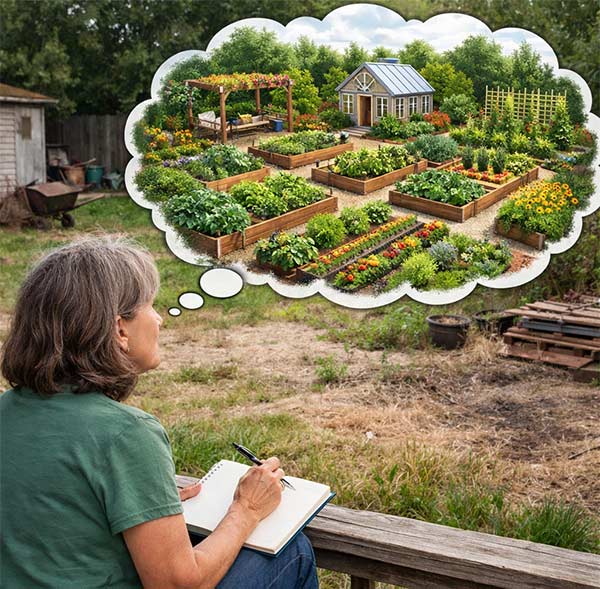
Winter in the high country is like nature’s big “Pause” button. The beds are sleeping, the hoses are frozen in positions that defy physics, and the pine trees are quietly judging us for last summer’s watering habits.
But while the garden rests… the gardener dreams.
This is prime time for planning, smart planning, so when spring finally arrives (in roughly… June), you’re ready to grow your most productive, least chaotic, no-accidental-zucchini-army garden yet.
Let’s walk through how to design your beds, rotate your crops, plan companions, learn from last year’s triumphs and tragedies, and start the earliest seeds indoors.
1. Sketch It Out: Your Garden Blueprint for Success
Before you start sketching, take a deep breath, grab some graph paper (or a digital planning app if you like to live dangerously), and channel your inner garden architect.
Ask yourself:
- What worked last year?
- What really didn’t? (Looking at you, overcrowded tomato jungle.)
- What new crops do I want to try?
- How much time will I actually spend weeding (be honest)?
Your garden sketch should include:
- Bed shapes and sizes
- Sun patterns (Where does the shade hit in April? In July?)
- Water access
- Perennial placements (berries, rhubarb, asparagus, herbs that refuse to die)
- Annual crop beds
- Paths that you promise to keep wide enough to walk through (future you will thank you)
A sketch is not art; it’s a map. And like any good map, it should get you where you want to go without detours through chaos and crabgrass.
2. Crop Rotation: Prevent Problems Before They Start
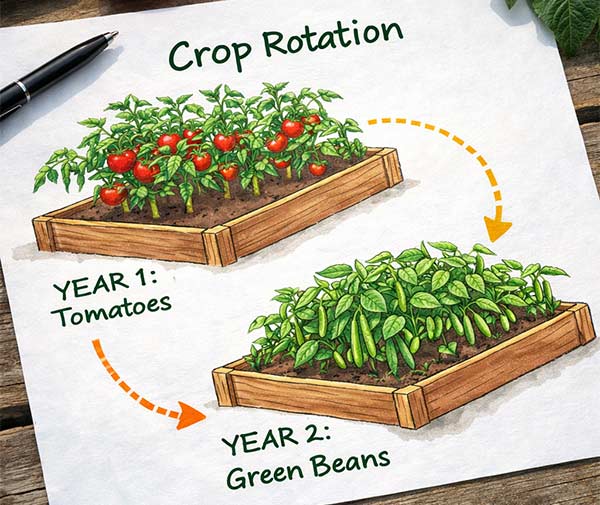
Crop rotation is basically garden preventive medicine. It helps you avoid soil-borne diseases, reduces pest cycles, and keeps nutrient levels balanced.
General Rule of Thumb (Easy Version):
Rotate plant families so no family grows in the same spot for at least 3 years.
Common Families to Keep Straight:
- Nightshades: tomatoes, peppers, potatoes, eggplant
- Cucurbits: cucumbers, squash, zucchini, pumpkins, melons
- Brassicas: cabbage, broccoli, kale, Brussels sprouts, collards
- Alliums: onions, leeks, garlic
- Legumes: peas, beans
- Roots: carrots, beets, radishes, turnips
Why bother rotating?
Because pests and diseases love routines.
If you plant tomatoes in the same place again and again, the soil becomes basically a spa for blight.
3. Companion Planting: Garden Matchmaking
Companion planting is one part science, one part folklore, and one part “let’s see if this actually works.” Luckily, many pairings really do benefit productivity, attract pollinators, deter pests, and improve flavor.
Classic Winning Combos
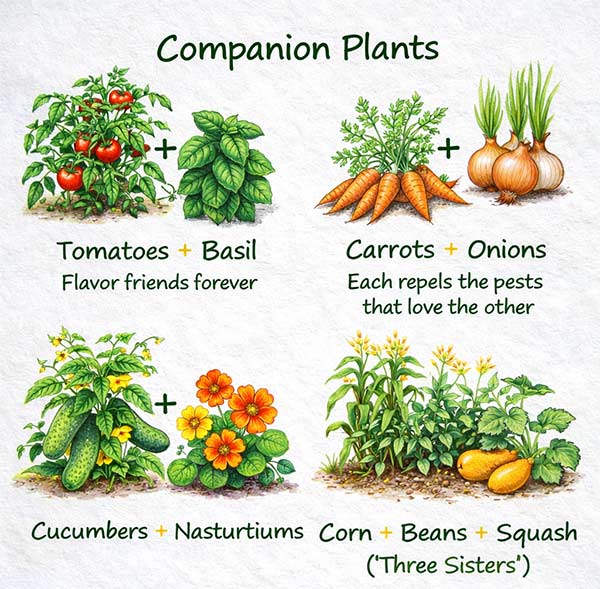
- Tomatoes + Basil: Flavor friends forever.
- Carrots + Onions: Each repels the pests that love the other.
- Cucumbers + Nasturtiums: Trap aphids before they attack your cukes.
- Corn + Beans + Squash (“Three Sisters”): The OG plant guild.
Plants that do not swipe right on each other:
- Onions + Beans = Nope. Onions stunt legumes.
- Potatoes + Tomatoes = Invite every potato disease to the party.
- Corn + Tomatoes = Tomato hornworms and corn earworms form an unholy alliance.
Think of companion planting as your garden’s relationship counseling—put the right neighbors together and everyone thrives.
4. Use Last Year’s Notes Like a Pro (Even If They’re on Crumpled Paper)
Your notes from last season are gardening gold. Even if they’re scribbles on the back of a seed packet or a text you sent to yourself that reads “never 8 tomato plants again omg,” they still count.
Look back at:
- What germinated well
- What died dramatically
- Which pests showed up and when
- Watering patterns
- Timing successes and failures
- High-yield beds vs. “meh” beds
- Shade surprises (pine tree: grows 14 inches every year)
Use those notes to:
- Improve spacing
- Adjust watering
- Pick better varieties
- Move problematic crops
- Plan earlier/later plantings
- Avoid repeating disasters that are still emotionally traumatic
Gardening is basically a lifelong experiment. Last year’s notes make this year’s experiment smarter.
5. Start Seeds Indoors: Onions, Leeks & Cool-Weather Crops
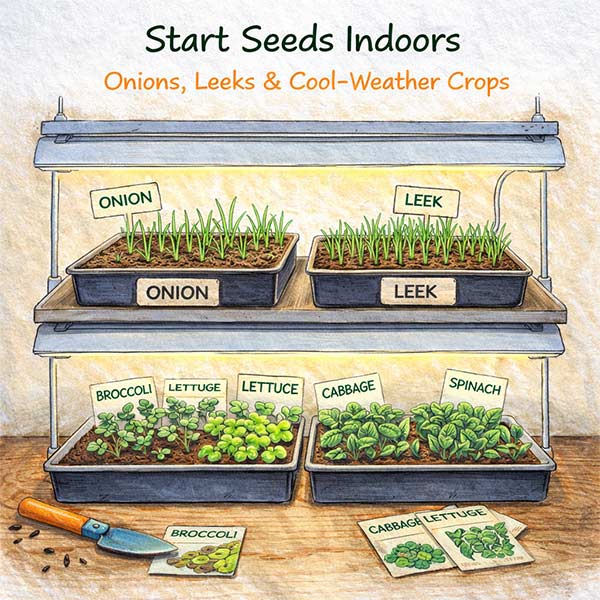
January–February in Zone 6b is prime time for starting your first seeds indoors—especially long-season alliums.
Onions, Leeks & Shallots — When to Start & Why
Onions are long-season, daylight-sensitive crops, which means you can successfully start them anytime between November and February, depending on your goals.
When to Start
- November–December: For the largest bulbs and earliest harvests.
- January: The most common and manageable timeline (less babysitting involved).
- February: Still works for fresh-eating onions, but storage bulb size may be smaller.
How to Start
- Use a sterile seed-starting mix
- Keep seeds warm for germination (70–75°F, heat mat optional but helpful)
- Move under bright light immediately after sprouting
- Keep lights 2–3″ above the tops
- Trim greens weekly to 3–4″ to promote thicker stems
- Bottom-water to prevent damping off
Why Start Early?
Onions form bulbs based on leaf count when day length increases (late spring).
More leaves = bigger bulbs.
Early seed starting (Nov–Jan) builds more leaves before bulbing begins.
Transplant Timing
- Harden off for 7–10 days
- Plant outdoors in late March to mid-April, depending on the weather
- Onions tolerate frost, but protect from hard freezes below ~25°F
Special Notes on Leeks & Shallots
- Leeks are more forgiving and can be started Dec–Feb anytime.
- Shallots from seed behave like onions — earlier = bigger bulbs.
- Alliums hate heavy nitrogen early on but appreciate it once established outdoors.
Other Cool-Weather Crops to Start Indoors
- Cabbage
- Broccoli
- Cauliflower
- Kale
- Swiss chard
- Lettuce (optional, also easy to direct sow)
Seed Starting Quick Guide
- Use a sterile seed-starting mix
- Light is critical (grow lights 2–3″ above seedlings)
- Bottom water to reduce fungus gnats
- Provide airflow (small fan = strong stems)
- Harden off 7–10 days before planting outdoors
These early starts give you a head start when our high-country spring still can’t decide if it’s winter or monsoon season.
6. When to Direct Sow Cool Crops Outdoors (Zone 6b)
For planning your sketch:
| Crop | When to Plant Outdoors |
| Peas | Late March–Early April |
| Spinach | Late March–Mid April |
| Radishes | Early April |
| Carrots | April |
| Beets | April–May |
| Lettuce | April–May |
Your sketch + seed schedule = fewer surprises when the weather whiplash hits.
7. Bringing It All Together: Your Garden Master Plan
Here’s your winter homework (the fun kind):
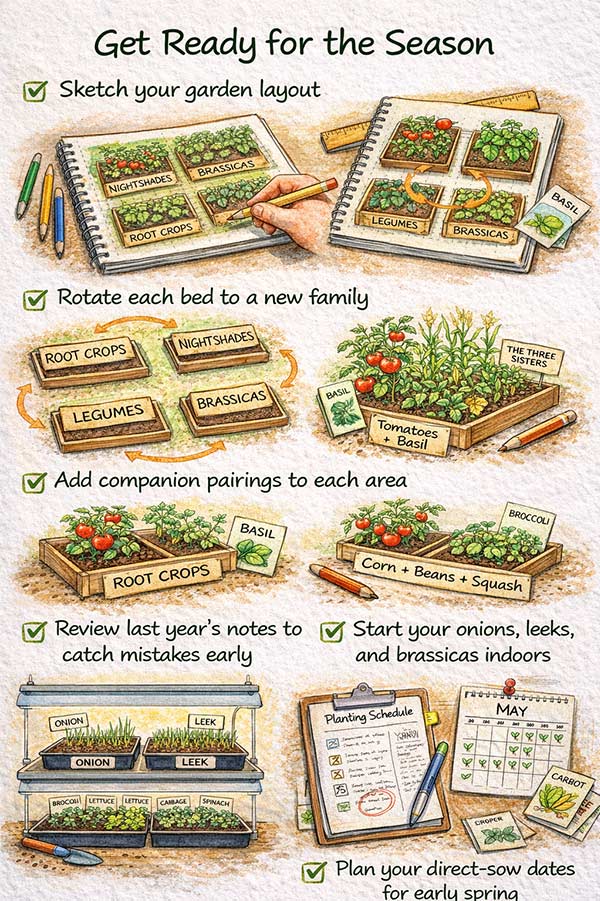
Do this now, and by May, you’ll look like a garden wizard who totally has their act together.
Final Thought:
A well-planned garden is a joyful garden.
A joyful garden is a productive garden.
And a productive garden is one step closer to your neighbors begging you to please stop leaving zucchini on their doorstep.